The extent to which the description may be used to construe a claim remains a matter of ongoing debate in European patent practice. Decision G 1/24 provided an initial answer in the context of patentability under Articles 52 to 57 EPC, holding that the description and drawings must always be consulted when interpreting the claims, rather than only where the claim wording is unclear. Decision G 1/25 subsequently confirmed this approach and, as a consequence, requires adaptation of the description where inconsistencies between the claims and the description result in non-compliance with an EPC requirement.
Both decisions, however, leave important questions unresolved. Can an explicit definition in the description depart from the ordinary meaning of a claim term? How should a conflict between the claims and the description be resolved? To what extent may features disclosed only in an embodiment influence the interpretation of a broader claim? It also remains uncertain whether the same interpretative principles apply under Article 123(2) EPC, an issue currently before the Enlarged Board in referral G 1/26.
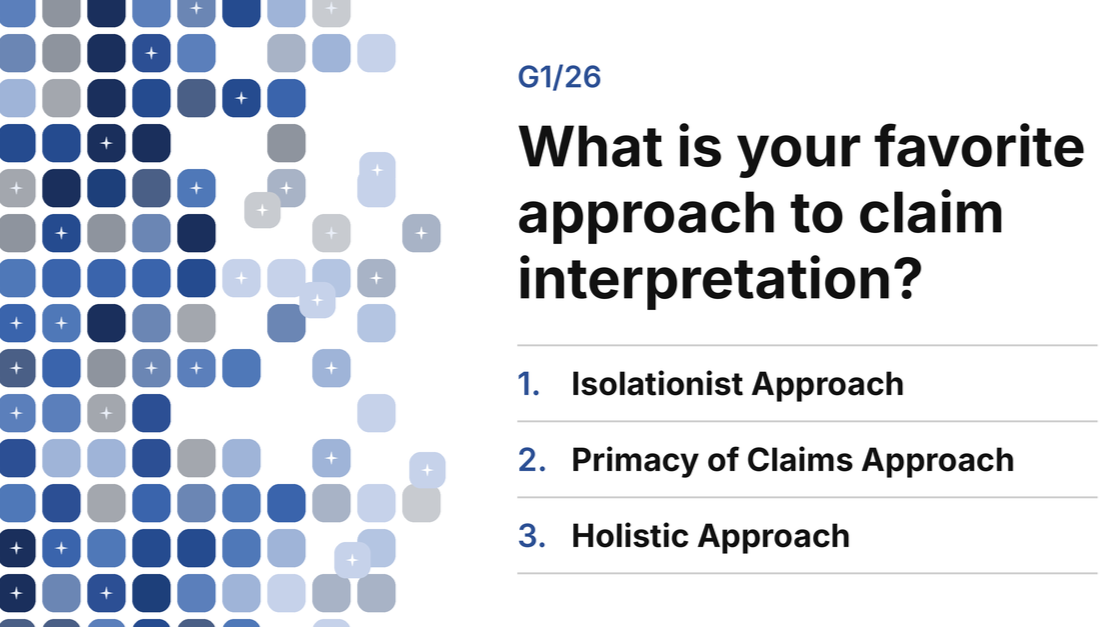
As a result, the Boards of Appeal continue to adopt different approaches, as the referral in G 1/26 itself acknowledges. In particular, the referral identifies three distinct lines of case law.
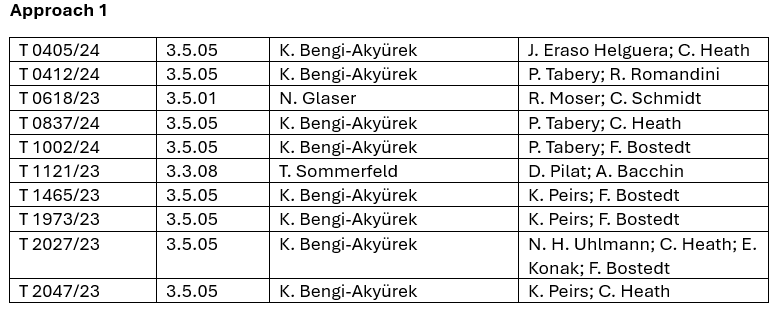
Approach 1: Description only to identify the skilled person
Under this approach, the description serves primarily to establish the relevant technical field and, consequently, the skilled person from whose perspective the claims are to be read. Once that perspective has been established, the description plays little or no role in determining the meaning of the claim language. Any technically sensible interpretation must therefore be taken into account. Examples include: T 0405/24, T 0412/24, T 0618/23, T 0837/24, T 1002/24, T 1121/23, T 1465/23, T 1973/23, T 2027/23, T 2047/23.
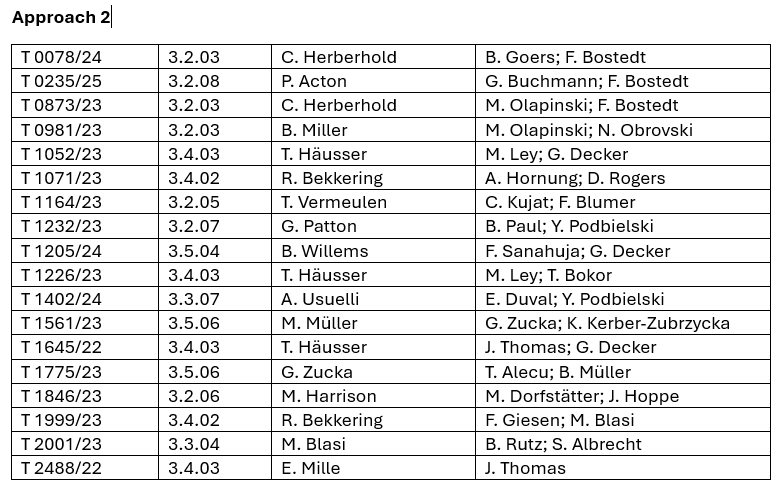
Approach 2: Description as a consistency check
Under this approach, the description plays a more active role. While the claims retain primacy, the description may be used to exclude interpretations that are inconsistent with the technical context of the patent as a whole. At the same time, features disclosed only in the description are generally not read into the claims, whether to narrow or broaden their scope. In particular, specific features of an embodiment are not treated as implicit limitations of more general claim language merely because they are disclosed in the description. Examples include: T 0078/24, T 0235/25, T 0873/23, T 0981/23, T 1052/23, T 1071/23, T 1164/23, T 1232/23, T 1205/24, T 1226/23, T 1402/24, T 1561/23, T 1645/22, T 1775/23, T 1846/23, T 1999/23, T 2001/23, T 2488/22.
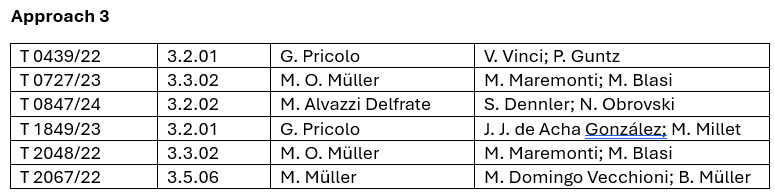
Approach 3: Holistic interpretation
A third group of decisions adopts a more integrated approach. Here, the claims, description and drawings form part of a single interpretative exercise. The description may therefore materially affect the outcome of claim interpretation; it may support a narrower or broader understanding of a claim term, provided that such an interpretation can be derived from the patent specification as a whole. Examples include: T 0439/22, T 0727/23, T 0847/24, T 1849/23, T 2048/22, T 2067/22.
A closer look at the Boards
A closer look at the individual decisions and the Boards behind them reveals a notable concentration of approaches. Approach 1 is predominantly associated with a single Board, namely Board 3.5.05 (computer technology and communications) under K. Bengi-Akyürek. Approach 3 is likewise concentrated: four of the six identified decisions originate from just two Boards, namely Boards 3.2.01 (mechanical engineering), chaired by G. Pricolo, and 3.3.02 (chemistry), chaired by M. O. Müller. By contrast, Approach 2 is represented across eleven different Boards spanning different mechanical (3.2), chemical (3.3) and electrical/physics (3.4 and 3.5) fields. It therefore appears to be the predominant approach in the currently available case law
Looking ahead
With G 1/26 now pending, the Enlarged Board has an opportunity to provide further guidance on the role of the description in claim interpretation, particularly in the context of the assessment of added matter under Article 123(2) EPC. Until then, practitioners should be aware that the significance attributed to the description may continue to vary considerably between different Boards of Appeal.
A final point is worth noting. The Enlarged Board that will decide G 1/26 includes technically qualified members whose names are associated with different strands of the emerging case law. In particular, G. Pricolo, currently serving as a technically qualified member of the Enlarged Board, chaired Board 3.2.01, which has issued several decisions representative of the holistic Approach 3. Likewise, R. Bekkering, another technically qualified member of the Enlarged Board, chaired Board 3.4.02, which has issued decisions that have been classified here under Approach 2. While it would be inappropriate to draw any conclusions as to the eventual outcome of G 1/26 from the Board's composition, the presence of members familiar with different interpretative traditions suggests that the principal perspectives currently reflected in the case law will be well represented in the Enlarged Board's deliberations.