

HKW INTELLECTUAL PROPERTY
neuigkeiten & einblicke
All | Meet The Team | Caselaw | HKW News
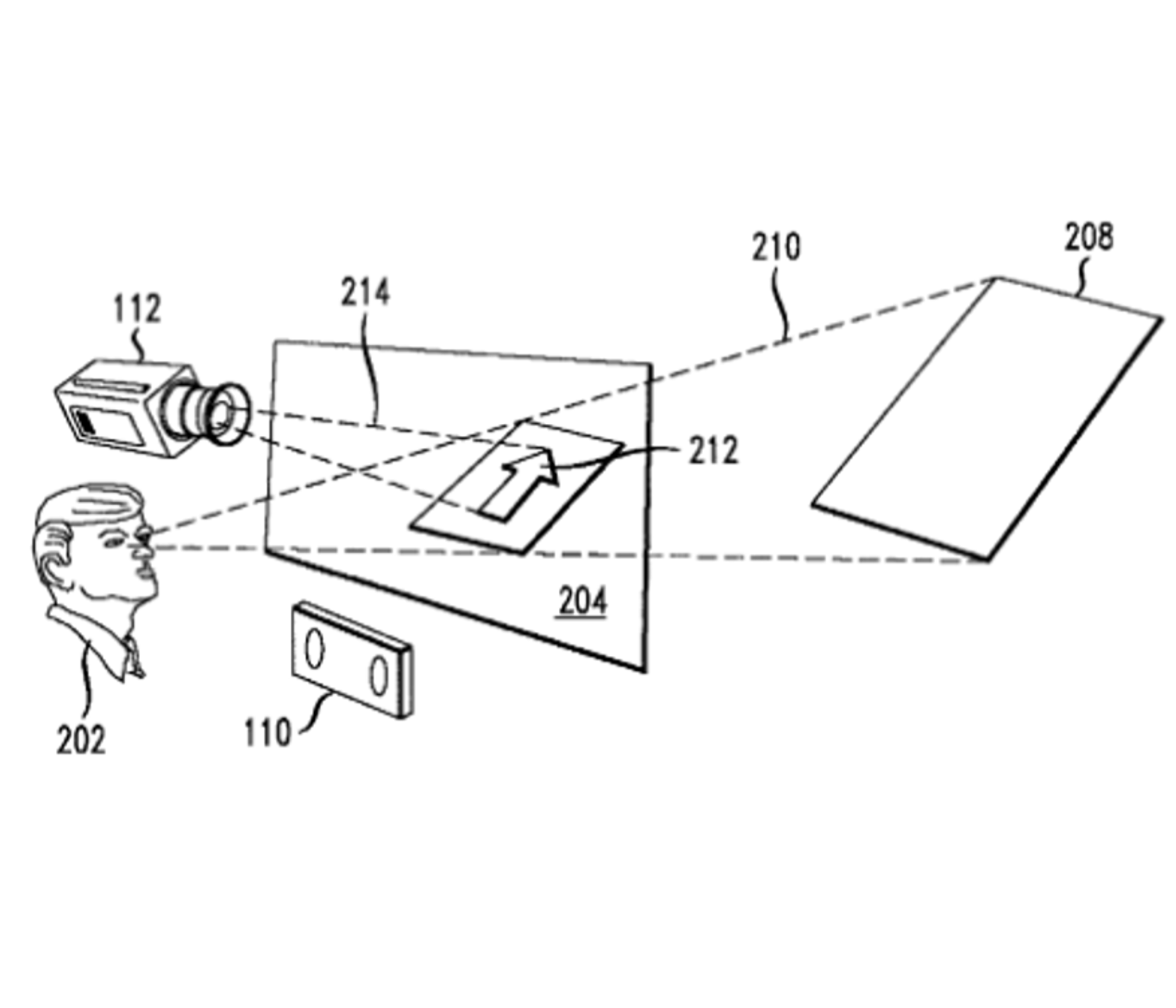
An Ambiguous Description Cannot Support a Claim Amendment: Lessons from T 0392/25
Appeal case T 0392/25 relates to an augmented reality (AR) for a construction vehicle windscreen. Although the claim at stake is lengthy, the case essentially boils down to the questions whether the disclosure that (A) "a location of an attribute [to be displayed on the windscreen of the vehicle] can be designated to prevent occlusion of an object" and that (B) "[a] luminosity and/or a transparency of an attribute image can also be adjusted to prevent obstruction […]" form two separate embodiments, i.e. A or B, an embodiment with both features, i.e. A and B, or a combination of both, i.e. A and/or B.
T0048/24 on Sufficiency of Disclosure for Machine Learning Inventions
One of the better known AI cases at the European Patent Office was Vesuvius vs. Refractory (T 1669/21), in which the Board of Appeals concluded that Refractory's patent fell short of the enablement requirement of Art. 83 EPC and had to be revoked. This case created quite a reaction, with many blog posts arguing that a number of details that AI patents need to disclose can be deduced from this decision.
Recent decision T 0561/23 provides further support for replacing an independent claim with multiple independent claims in oppositions
In the case underlying the decision T 0561/23, the Opposition Division came to the conclusion that several auxiliary requests submitted during opposition proceedings are not complying with the requirements of Rule 80 EPC.
EPG‑Berufungsentscheidung Abbott v. Sinocare / Menarini vom 17. April 2026 (UPC_CoA_901/2025)
Das Berufungsgericht des Einheitlichen Patentgerichts stärkt Patentinhaber bei UI‑bezogenen Erfindungen (UI; User‑Interface) und einstweiligen Verfügungen.
Mit Order vom 17. April 2026 (UPC_CoA_901/2025) hat das Berufungsgericht des Einheitlichen Patentgerichts die erstinstanzliche Entscheidung der Lokalkammer Den Haag aufgehoben und zugunsten der Patentinhaberin Abbott eine einstweilige Verfügung erlassen.
Der Fall betrifft ein Einheitspatent im Bereich der kontinuierlichen Glukosemessung (CGM) und ist aus mehreren Gründen von erheblicher praktischer Relevanz.

Why the Starting Point Matters: Key Takeaways from the Recent Decision T 0610/24
The following provides a summary of the very recent decision T 0610/24, in which the Board of Appeal examined the criteria for selecting an appropriate starting point when assessing inventive step under the problem-solution approach. In particular, it clarifies the circumstances in which a prior‑art document can be regarded as a suitable starting point and how this selection influences the subsequent obviousness analysis.

Welcome to the Team!
We are excited to have Dr. Mathias Neumüller as a further addition to our talented team of patent attorneys. Mathias recently joined our team, bringing with him an impressive academic background. He holds an M.Phil. in Physics, …