
An Ambiguous Description Cannot Support a Claim Amendment: Lessons from T 0392/25
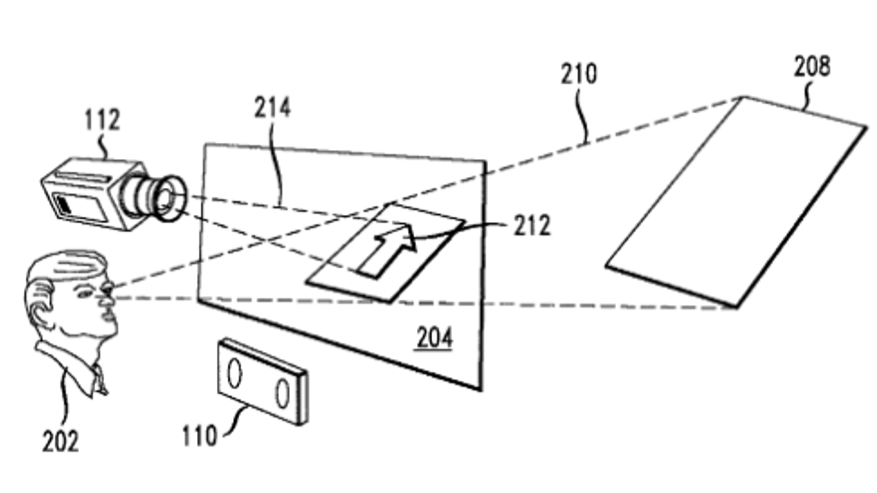
Appeal case T 0392/25 relates to an augmented reality (AR) for a construction vehicle windscreen. Although the claim at stake is lengthy, the case essentially boils down to the questions whether the disclosure that (A) "a location of an attribute [to be displayed on the windscreen of the vehicle] can be designated to prevent occlusion of an object" and that (B) "[a] luminosity and/or a transparency of an attribute image can also be adjusted to prevent obstruction […]" form two separate embodiments, i.e. A or B, an embodiment with both features, i.e. A and B, or a combination of both, i.e. A and/or B.
As it was, the applicant restricted the claim to the combination of A and B early in the proceedings, to overcome a lack of novelty objection raised in the European Search Opinion. The Examining Division objected, stating that said amendment effectively mixed two different embodiments, i.e. an embodiment with feature A and an embodiment with feature B. While many other objections with regard to original support and clarity were raised and partly overcome in the written procedure, critically, the above limitation of the claims to the combination of features A and B remained, partly because the applicant held them to be (technically) non-contradictory, and moreover, worked synergistically together. Interestingly, the Summons to Oral Proceedings focused on patentability in the sense of Art. 52(1) EPC, and did not explicitly raise or maintain the earlier objection regarding the lack of original support pursuant to Art. 123(2) EPC. It did note, however, that both features (discussed with regard to their technical effects) are based on different parts of the description, which do not relate to the same technical context.
The applicant argued in support of the purported synergistic effect, but failed to address the previously raised concerns concerning Art. 123(2) EPC. While the Examiner apparently highlighted the issue once more in a telephone conversion prior to the hearing, no further (auxiliary) requests were filed, and the Oral Proceedings were held in absence of the representative. The Examining Division concluded that the combination of features A and B is not unambiguously disclosed in the original specification, and hence, that the sole request did not comply with Art. 123(2) EPC.
With the appeal, the wording of claim 1 was once more amended, yet not to the effect that features A and B were claimed in isolation, e.g., as alternatives A or B. To back their case, the appealing applicant argued that the synergetic effect would mean that the skilled person would understand the two measures as being used in conjunction, rather than as alternatives, and that the relevant paragraph of the description does not imply any additional context that could or would guide the skilled person to the interpretation that the term 'also' directly and unambiguously discloses alternatives. Instead the skilled person would derive from the relevant paragraph the teaching 'A and/or B'. Whilst such a disclosure encompassing several possibilities was not literally contained in the specification, the applicant argued that the proposition underlying the board's reasoning would plainly be incompatible with real-world practice as expressed commonly by an 'and/or' relationship.
The Board rejected these arguments. The fact that combining features A and B may be technically advantageous merely shows that the skilled person might consider combining them. It does not establish that the combination forms part of the technical teaching directly and unambiguously derivable from the application as filed. Likewise, the word "also" did not clearly establish a cumulative relationship between the two measures. Accepting the applicant's interpretation would require selecting one of several possible readings of the relevant paragraph (effectively creating ambiguity), which is incompatible with a direct and unambiguous derivation of the combination according to the so-called Gold Standard of G2/10. The board finally pointed out that the specific wording used in the present case is not equivalent to the commonly used 'and/or' relationship.
In the end, the Decision by the Examining Division was confirmed and the application was rejected. While the decision is specific to the case at hand, and the wording of the original PCT application originating from a different jurisdiction, it illustrates that Article 123(2) EPC issues do not arise only from omitted features or impermissible combinations. Ambiguity in the description itself may prevent applicants from relying on a passage as a basis for amendment. Where a disclosure can reasonably be read in more than one way, an applicant cannot simply select the interpretation that supports the desired amendment and treat it as directly and unambiguously disclosed. The safest course remains careful drafting that explicitly sets out intended feature combinations and alternatives from the outset.